Print This Post
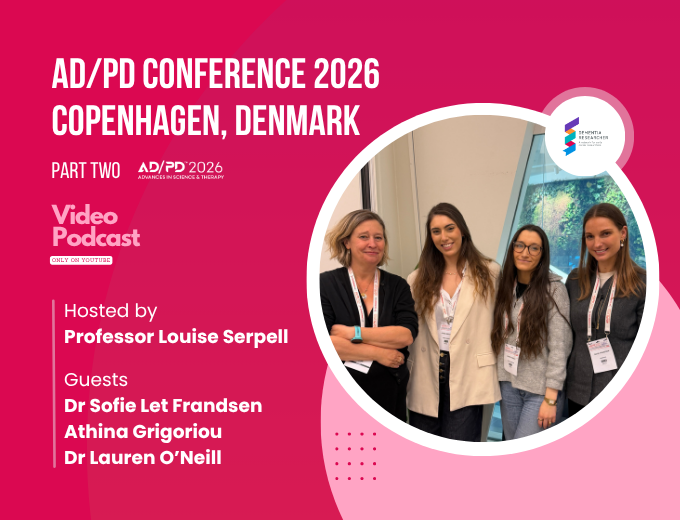
This episode of the Dementia Researcher Podcast comes from the AD PD Conference 2026 in Copenhagen, bringing together global researchers to share the latest in Alzheimer’s and Parkinson’s disease research.
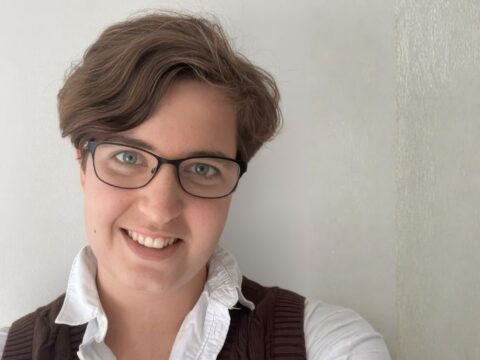
Hosted by Professor David Cash, the episode features Grace Thompson, Dr Marieta Vassileva, and Dr Alice Carstairs, each offering their own highlights from across the conference.
Rather than trying to cover everything, the conversation focuses on standout talks and emerging themes. These include advances in biomarkers, growing interest in co pathology, the role of neuroinflammation, and how new tools like AI and multiomics are changing how we understand disease.
Across the discussion, the group reflects on what new findings might mean for diagnosis, treatment, and the future direction of dementia research. There is also a strong sense of optimism, with the field moving towards combination therapies and earlier intervention.
This is Part One of a two part series capturing reflections from the conference.
Key Takeaways
- Biomarkers are now central across diagnosis, prediction, and trials
- Co pathology is a major theme, with diseases rarely existing in isolation
- Tau is emerging as a key driver of cognitive decline
- Microglia and neuroinflammation offer new therapeutic targets
- Multiomics is helping uncover detailed disease mechanisms
- AI is becoming essential for handling complex datasets
- Early career researchers are playing a visible role at major conferences
- Synaptic loss is strongly linked to cognitive decline
- Combination therapies are increasingly seen as the future
- The field feels more optimistic than in previous years
Voice Over:
The Dementia Researcher Podcast, talking careers, research, conference highlights, and so much more.
Professor David Cash:
Hello, and welcome to the Dementia Researcher Podcast. Today's episode is coming to you from the AD/PD conference here in the beautiful city of Copenhagen, where researchers from around the world have gathered to share new findings on Alzheimer's disease, Parkinson's disease, and other related neurodegenerative conditions.
Hello, I'm Professor Dave Cash from the University College of London, and I'm delighted to be hosting today's show. AD/PD is one of the major international meetings in our field, bringing together researchers working on everything from basic molecular mechanisms to clinical trials, neuroimaging, and new diagnostic approaches.
Over the past couple of days, there have been hundreds of talks and posters. So rather than trying to summarise everything, today we're going to focus on a few highlights that really stood out. Joining me are three people who have been exploring the conference, Grace Thompson, a PhD student from the University of Exeter, Dr. Marieta Vassileva from the University of College of London, and Alice Carstairs from the Alzheimer's Society.
Hello, everybody.
Dr Marieta Vassileva:
Hi.
Grace Thomson:
Hello.
Professor David Cash:
Before we begin, could I ask each of you to briefly introduce yourself, and tell listeners what areas of research and work you're in? We'll start with you, Grace.
Grace Thomson:
Hello, I'm Grace Thompson. I'm a PhD student at the University of Exeter. I primarily research the role of microRNAs and small non-coding RNAs in Lewy body dementias.
Professor David Cash:
Great. Thank you. And Marieta.
Dr Marieta Vassileva:
Hello. Thanks for having me today. I'm Marieta, and I'm a research fellow at the UCL Alzheimer's Research UK Drug Discovery Institute. And my background is focusing on microglia and their role in dementia neuroinflammation in general.
Dr Alice Carstairs:
Hiya, I'm Alice. I am not a researcher, but I work in the research communications team at Alzheimer's Society. So, I get to talk about all of the great, kind of research that our funded researchers are doing and disseminate the outcomes and impacts from that work.
Professor David Cash:
For listeners who have not joined us for one of these conference reflection episodes before, here's how it works. Each of our guests will take a turn sharing a talk, a poster, or a session that stood out to them from the conference so far. And then, when describing the work, we are asking them to summarise what the research was about, what the key findings were, and why they think it matters.
After each summary, we'll have a short discussion before moving on to the next highlight. And we'll go around the room several times, depending on time. So, Grace, let's start with you. What's one talk or poster that's really stood out for you for the conference so far?
Grace Thomson:
I really enjoyed yesterday there was a number of talks that focused on single-cell RNA sequencing. And being in epigenetics myself, it's very interesting to see. But one of the talks that really stood out was a talk from Melissa Graham Peters at University of Cambridge, where she was looking at the molecular and cellular differences in Parkinson's disease and Parkinson's disease dementia.
And its really important work, because approximately 40% of patients develop dementia when they have Parkinson's disease. Her work used single-cell RNA sequencing to look at the different transcript usage in Parkinson's disease and Parkinson's disease dementia. And they actually found quite a difference in Parkinson's and Parkinson's disease dementia, which I found really interesting with my work being quite similar as well. It's quite nice to have that overlay and touching on work that's not been done before.
Professor David Cash:
Okay. And for those simpler neuroimaging folk of us, give us a little bit more about why you think epigenetics is so important in different forms of dementia.
Grace Thomson:
It's because I think a lot of the literature highlights that there's a role of dysregulation in genes. And I think with the technologies developing, like RNA sequencing, small RNA sequencing, we can really capture why certain cell types are more vulnerable than others. And we can really highlight some of the pathways that have been affected that may not have been done traditionally. And I think, with some of these new technologies, we're really pushing them to be able to achieve quite a lot of information about what's happening on a cellular and molecular level. And I think that's really important when we go and design future therapeutics or biomarkers.
Dr Marieta Vassileva:
I think, yeah, I agree. And I think yesterday for me also, one of the highlights was that there was a lot of omics work in general. It seems to be something that is still very highly explored in the field. I do remember that talk, and it was very cool. It's very outside of my area of expertise, but I still thought it was really nice talk. Yeah, very interesting.
Grace Thomson:
Yeah. Like the layers of omics, I think it really highlights the information that we can gauge from different technologies.
Dr Alice Carstairs:
I was just going to say that I missed this talk, and now I'm gutted. I'm going to have to go and watch it back because that's super interesting.
Professor David Cash:
That is one of the real benefits now of hybrid conferences nowadays. There's always so much FOMO. I want to go to this talk, and this talk are occurring at the same time. And now at least with on demand and streaming, you can kind of catch up a little bit.
Dr Alice Carstairs:
Four or five concurrency.
Professor David Cash:
Exactly. So just going back to that, what were some of the pathways that might've been different between Parkinson's and Parkinson's disease dementia?
Grace Thomson:
So, from what she said, it was that there was a differential usage of APP and SNCA transcripts, particularly within excitational neurons. But it was almost that the Lewy body pathology was actually the driver of the differential transcript usage, which is quite interesting because it's still quite underexplored. So yeah, I think there's still got a lot of work to do, but I think when you add all these layers of transcriptomics, various multiomics, it really does build up a big picture of the pathways that we could target.
Professor David Cash:
Yeah. And it gets to the point of, are we looking at subtypes, different diseases, a spectrum that we're along, and especially when you're mentioning APP instantly, sort of the Alzheimer's disease person in me, that rings a bell. So, it's interesting that, how we frame these things around co-pathologies or spectrums, is more of a construct that's helpful for us rather than maybe...
Grace Thomson:
She did mention that, in their findings, they were actually seeing that PD and Parkinson's disease dementia are actually more distinct than they were similar, which does vary across the literature in the field. So, it's quite nice to be able to actually see some evidence that they might be distinct as well.
Professor David Cash:
Okay, great. Anybody else have any more comments on that talk?
Dr Marieta Vassileva:
No, I think just highlighting what you said, just using these technologies to start dividing, more specifically the diseases, not just generalising and saying PD, AD, because now we know it's not really that simple and usually there are core pathologies at the same time. And I think that came a little bit from, I think, one of the plenary lectures in the afternoon from Leah Grinberg, like the pathology where they look at the different subtypes. And that was really interesting. Yeah.
Dr Alice Carstairs:
Yeah, absolutely. Co-pathology seems to have been a real theme this year. It's come up in a lot of the sessions and the talks that I've been to. The plenary speaker, as you said, Leah yesterday was absolutely fantastic looking at the neuropathology and the autopsy and tracking back the kind of different co-pathologies. So yeah, it seems.
Dr Marieta Vassileva:
And I think it was beautiful work where you can see, because she obviously showed some of their research and how they're looking at brain slices. And it's kind of highlighting, I think she said it in her talk as well, that I think histology has been discarded for a while, because now we have these new techniques called the omics, but it still has a place and we have to in a way integrate them all to get the best.
Dr Alice Carstairs:
For sure. And then what she was saying about relating it back to biomarkers was super interesting to me as well, that actually some of the biomarkers we have can only identify things into the intermediate and late stages. But when you're looking at brain autopsy, there's obviously all of these stages before that, that we can track with biomarkers. So yeah, it was a super, super interesting talk.
Professor David Cash:
Yeah. Leah Grinberg has been, such a fantastic career and just an enthusiastic champion of science and research and a good mentor, I think. I think it really shows the power of neuropathology. We were talking about, exactly what you were saying before. People went away from pathology for a little while, and now a lot of the imagers are coming back because they want to know what does this really do. What does this really measure? And we're beginning to see the power that these things are not competitors, they're things that help each other out.
And I found it fascinating that a lot of her work was based on the Sao Paulo Brain Bank, which was like the largest population... I never even knew there was a thing of a population brain bank before, but this whole idea of a population brain bank and the ability to then bring in epidemiology into pathology.
But we kind of digressed. We kind of had a group highlight there on Leah Grinberg's plenary, which I think I've heard from lots of people was really important. And things like the locus coeruleus and the denti raphe nucleus identified from her pathology work is now an area actively imagers are targeting is, can we make some measures there? What connections are there? How is it being affected during the disease? So, it just shows that virtuous cycle in that regards.
Dr Marieta Vassileva:
Yeah, because I think it's always nice to see the functional outcome from... Obviously the omics tells us a lot about pathways, but it's hard, I think, especially from our perspective as drug discovery researchers, you want to be more specific. If you have to identify a drug target, I think genomics informs us only so far, and then you have to have something to be able to look at.
Professor David Cash:
That's really important. Yeah, definitely. So Marieta, I'll turn to you now. What presentation caught your eye or poster or talk that you've seen so far, these first two days?
Dr Marieta Vassileva:
I think for me, I'm going to highlight the whole session, that I think I'm very biassed towards. So, I thought that the session which was focused on microglia astroglia from mechanisms to potential treatments was very good.
And there were a few talks there that I think were a big highlight. Peter George-Hyslop, Mathew Blurton-Jones, Soyon Hong from UCL, also pretty interesting. And I think I personally found them very interesting because they relate a lot to my work, but also the kind of range of techniques that were showed there. There was everything from omics to biochemistry, kind of like classic IP pulldowns in cells, different models like IPSCs, integrating IPSCs with mouse models, which is something that I think we're definitely moving towards in the field.
So, I thought it was such a wide range of technologies, and then showing very mechanistically, I think each of the speakers in their respective protein of interest, how they've mechanistically looked at the pathway, and tried to figure out what specific proteins play part in what mechanisms in microglia. And I thought that was really interesting to look at.
Professor David Cash:
And if you had to kind of, say, two or three takeaways from the session, seeing how all those talks kind of fit together, what were the big takeaways that we're getting from the research and the microglia in the field right now in dementia?
Dr Marieta Vassileva:
I think we're definitely moving, we're gaining more and more insight into how these pathways work, because I think we've known for years now that there is genetic risk associated with microglia. We know that there's key receptors like TREM2. But I think for a while we haven't had that super specific mechanistic understanding of how the pathways work, what protein interacts with what protein downstream, like that sort of thing.
And I think now through these researchers and their brilliant work, we're starting to understand a lot more about the specific proteins that we can target. For example, in Soyon's talk, we heard about MFG8, which is a factor that is involved in how ostracised communicate with microglia, and she's demonstrating that that can be a mechanism through which synapses are engulfed, which we know is a key thing that's happening in AD. So, I think definitely more and more drug targets.
Professor David Cash:
Well, excellent. I mean, and from an imaging perspective, neuroinflammation is fascinating because we really feel that we don't have yet a good tool. So, we have some various PET tracers, but it's such a complicated, fascinating sort of reactive process that your brain is doing when it's being triggered. And in some cases, it can be beneficial. In some cases, it could be worse. And our tools right now are quite blunt in that regard. And we can only see it's happening. We don't know if it's a good happening or if it's a bad happening.
Dr Marieta Vassileva:
Yeah. And I think the timing is very key. And I think that came through this morning, Bart De Strooper plenary talk, where he very nicely highlighted the different, kind of like stages of Alzheimer's. He broke it down to six different stages starting really early on from the initial A-beta oligomeric accumulation, all the way down to tau aggregation and cell death. And I think it was really nice how he almost put different time points across it saying, "If you want to treat here, you have to look at this. If you want to treat here, you have to look at this." And I think that's really important. I think overall for treatments moving forward in the field and how we even design trials and what biomarkers we look at, because I think now, we know that it's really complex, it's really longitudinal, and I think you can't just measure a beta and say, "Oh, this is enough."
Professor David Cash:
Curious, did other people attend this session? If you did, what did you think of it?
Grace Thomson:
I didn't, but it sounds really interesting.
Dr Marieta Vassileva:
Sorry, I've outed everyone.
Professor David Cash:
Well, that's good. That way we're providing complimentary information, so that's helpful in that regards. All right. Well, great. Alice, I'll turn to you. Yeah, you have an interesting perspective being a communications officer, thinking about what's important for patients, their families. What kind of research, from your perspective sitting on a funder, really rang out to you as this is something that's important for us to communicate to?
Dr Alice Carstairs:
So, I think there's been an awful lot of different research that's kind of been highlighted. And I kind of feel like that's one of the nice things about this conference is we almost feel like we've started out in that biomarker and causes a mechanism space. And then later on in the conference, we're moving more towards the kind of treatment space and hearing a little bit more about clinical trials. So, really enjoying the range of research that we're getting at AD/PD. And I think that's really important for dementia research is that we continue across that full spectrum.
One of the talks that I picked out as particularly interesting came from a PhD student actually. And that was something I was also really encouraged to hear and see, is how many early career researchers are getting the space to be able to talk and present at these events, which I think is so important.
But yeah, this was a first year PhD student called Lauren Young, and she's from Torres Spire Jones' lab. And she was presenting her work on looking at a biomarker for synapses, which I know that the reduction in synapses is one of the better, kind of linkages to cognitive function. So how great would it be if we had a biomarker to be able to link to that? And she just presented just some really elegant work looking at SB2A, and kind of tracking that and determining that yes, the changes that you can see in PET imaging with SV2A aren't then linked to changes in protein content, but actually changes in levels, the numbers of synapses. And that was doing some really elegant work with brain tissue cell slices, and sort of reconstructing them in a 3D space for microscopy and overcoming some of the technical difficulties with light microscopy and synapses.
So yeah, I think it's super important that we've got work like Lawrence, which is kind of that early stage, looking at how can we do this, all the way through to the later parts in the week when hopefully we're going to hear a little bit more of a deep dive into some of these clinical trial results.
Professor David Cash:
Did anybody else see that or do you guys tend to work on synapse density or synaptic proteins at all in your work?
Grace Thomson:
We tend to, but some of my results are leaning towards that. So, it's quite nice to hear that.
Professor David Cash:
Yeah. So, I actually, I saw that talk on Amanda actually this morning, and I agree. It was a great talk and a great example again of the pathology working with imaging and really a clear answer to the question. She was really wondering, is it that we're seeing less synapses, or we're seeing less proteins in the same number of synapses? And her conclusion from what she showed seemed to be the former, that we're losing less synapses.
Dr Alice Carstairs:
Yeah. And I think it's being able to take that yes/no question and give a definitive answer is, I mean, it's rare in research, let's be honest, but being able to do that and sort of answer those questions so succinctly, she did a fabulous job.
Professor David Cash:
Yeah. And yeah, especially it must be daunting as a first year PhD student.
Dr Alice Carstairs:
I couldn't have done it. That was a lot of people in that room.
Professor David Cash:
So that's interesting. You mentioned some of this might be related to your work. How so?
Grace Thomson:
So, my wife looks at microRNAs, and some of the results that we're finding is that there's a link with some of the microRNAs that are affected in late-stage Lewy body pathology to synaptic dysfunction. We're still unpicking it. MicroRNAs are pretty tough to work with, but we're hoping to actually implement some more new techniques. So, microRNA scope. So, this would be probing the microRNAs with an oligo. So, you can look at the in-situ locations of these. So hopefully, potentially it might produce synapses, we'll never know, but well, in a few months, but yeah, it's good to hear that it's kind of leaning towards that in terms of the research as well.
Professor David Cash:
Great. Great. Well, I think if I'm going to take the prerogative of being the host and offer one of my personal highlights, you may be surprised, it's about imaging. And one of the things I'm really interested is, I work a lot in the at-risk of the preclinical stage of AD and thinking about when we can start seeing individuals transitioning from one state to the other. So, I think there's a fair amount of evidence from recent papers now that if there's both amyloid and tau present in individuals, the time to cognitive impairment is relatively short.
And Stamakara Yani, who is at the University of Gothenburg, was looking at that. So, she works with Michael Scholl and Alexis Moscoso there, and they've collected a lot of amyloid and tau PET data. And she was particularly looking at three large cohorts, ADNI, the Harvard Ageing Brain Study, and the A4 sort of presymptomatic trial using solanezumab.
All these are publicly available datasets that are great researchers for tools for researchers like me. And what she looked at was particularly cognitively unimpaired people, about three, 400-ish people, who had amyloid and longitudinal tau. And she found that... So, one of the things that I've been most curious about is what is that transition from Tau negative to Tau positive? When does that happen? And with that data, she was able to show roughly about a third of individuals transition, over a six-year process, to go from amyloid positive, tau negative to Tau positive. And then once they're at that stage, there's actually quite a fair amount of risk involved.
But going a little bit forward, who are those people? And we're still looking at that, but she found that older individuals and E4A carriers were... So, things that we wouldn't be surprised by are driving some of that transition.
The other thing she looked at is that Tau positivity is really that driver to cognitive impairment. So, the number of individuals who went to cognitive impairment were predominantly people who were Tau-positive. And if you're Tau-negative, it was some other source. So, the amyloid negative and amyloid positive individuals didn't go jump right to cognitive impairment, and they did a relatively equal amount. So, it was really helpful for us to kind of get better timings, get better windows for when we could potentially treat people in the disease. So that was one I really liked.
Dr Marieta Vassileva:
Yeah, I think definitely. I think there's more highlight on Tau, although I think there is a lot of sessions still on APOE and things like that. But I think definitely I saw a lot of stuff yesterday about Tau developing models to look at Tau, because I think that has been a problem in the field for a while and we don't have anything that mimics Tau pathology in humans very well in animal models.
Professor David Cash:
Yeah. So, we have good animal models for amyloid, say. Yeah. Okay.
Dr Alice Carstairs:
No, I saw that talk. It was super interesting. And that Tau kind of story has come up a few times, and I think has also come up in the treatment world where people are saying, well, is it that we're going to need multimodal treatments that hit the sort of different parts? And obviously it's fantastic. We're starting somewhere with our amyloid treatment, but are we going to need those amyloid treatments and those Tau treatments to be having such an impact in people living with dementia?
Professor David Cash:
Yeah. And I think in some ways the fact that we now have amyloid disease modifying therapies allows us to dare to dream about something like a combination therapy. It's hard to talk about that when you don't even have a first step working in individuals.
Dr Alice Carstairs:
Yeah. And we wouldn't have been having this conversation however many years ago.
Dr Marieta Vassileva:
No, and I think some of those combination therapies and things are definitely coming up. I was, just before coming here, I was at the session where both Sanofi and therapeutics were talking about their TREM2 small molecules and the developments on that, which are moving forward and they've both did in vivo proof concept studies. So that's really cooled to see. So, I think hopefully soon we're going to see some other treatments coming in as well.
Grace Thomson:
And I liked how in the debate yesterday, it was almost proposed that we should look at how the Canterfield do it and whether we have several lines of treatment. I think that's really powerful and I think that'll probably be the way that it might go.
Professor David Cash:
Yeah. So just to fill in for the people, they tried to frame it as a debate late in the afternoon, but really it was, I love it, it was sort of the interface, I guess, between industry and academia, how they could work together, what frustrations there were there. And I didn't really feel like a tension between the different groups, but they had some really important academics like Cynthia Lomare. They also had Mark Minton from Eli Lilly. So, they had Jeff Kircher from Roche. They had the head of the ADDI, Nirojan Bose. So, they had a good mix of people who were all coming at it from different perspectives. And you're right, they did mention this idea of like, we need to up our vernacular game, I guess. Yeah.
Grace Thomson:
Those exciting times, you kind of know that we're on the cusp of getting that. It's just, yeah, hopefully.
Professor David Cash:
Yeah, no, absolutely. And then hopefully other forms of dementia will follow suit. Any other highlights that people wanted to raise? Any other things, talks that we haven't touched on already?
Dr Marieta Vassileva:
I think we kind of briefly touched on it, but definitely biomarkers. Biomarkers are everywhere. Don't think I've been in a talk where they haven't mentioned biomarkers, since yesterday. And I've seen all ranges of people doing CSF, blood. I think I saw urine biomarkers in one of the talks, which is very cool.
Grace Thomson:
And then the integration of AI with them as well, that's been a big theme as well, which has been great. It's exciting to know that that could make such a big difference.
Professor David Cash:
Yeah. Going back to the biomarkers, I saw a talk on a Singapore cohort. I believe that the author's name was Joyce Tang, and it was interesting. So, she had your MRI markers, your white matter hyperintensity, your hippocampal volumes. She had a whole panel of both the new NULISA, and to look at brain-derived P-tau, which I know a lot of people are really interested in at the moment.
And she was like, "Well, what's the most parsimonious model to predict cognitive decline?" And in fact, it didn't involve any PET at all. It involved P-Tau-217 to give you the sort of amyloid, a white matter hyperintensity marker to give you some of the vascular elements, and hippocampal volume for neurodegeneration. And when you think about a blood test and an MRI, MRI is still, well, far more accessible than PET, not super accessible, but it still is something that sounds like it could be a really beneficial element in terms of diagnosis and predicting where people are going.
Dr Marieta Vassileva:
Yeah, because I think that it's basically two sides of the story. One is to do it diagnosis, prediction, maybe what we were saying about the different types of dementia actually properly diagnosing people. And then, I think the second from drug discovery perspective, is something that gives us a better readout in trials, where you know that you are actually modulating the pathology in a meaningful way. I think that's something quite important.
Professor David Cash:
And it highlights the fact that different tools, whether they're blood, CSF, or imaging, might be more appropriate in different settings like that.
Dr Marieta Vassileva:
Yeah, exactly. Depending on what your target is doing and what you're expecting to see. And I think again, going back to what stage you're actually targeting, obviously if you're looking at P-Tau 217 quite late, maybe earlier on, you want to measure different things that more linked to the neuroinflammatory aspect.
Dr Alice Carstairs:
I think it's been really interesting as well hearing so many people talk about how we use biomarkers as well. There was a, I think they called it a forum chat, with quite a number of people working in the field who were just discussing, are we at a stage yet where biomarkers can be used as a confirmatory test? There we go. Is it enough on their own?
And just hearing that sort of clinician side and how primary care practitioners are using them compared to how we as researchers are using them, I think that conversation has been really interesting to listen to, and hearing the different kind of viewpoints about, yes, perhaps we could use them at this point. And other people saying, "Well, no, that's not how they're being used at the moment. We do need the imaging, the MRI, the PET at the moment, but wouldn't it be good if?"
And so yeah, I've really valued hearing all of those discussions and conversations as well.
Professor David Cash:
And I guess going more to that level, we're very biomarker and omics heavy in this group, but I was curious if anybody saw some of the session on the first day led by Jill Livingston and Mia Kivapelto about modifiable risk factors with a very provocative title, Is Dementia Preventable?
Dr Alice Carstairs:
No, I missed that one. I know Jill Livingston's work and with the Lancet kind of report, obviously Alzheimer's Society have helped fund kind of part of that, but no, it wasn't at the session. Were there some key takeaways and stuff to come away with?
Professor David Cash:
Well, I think so. So, they showed the FINGER study originally, done in Finland showed that this very carefully, very tailored, very intense multi-domain intervention is something that will really slow down cognitive decline in individuals. And then, Jill Livingston talked about the 14 modifiable risk factors as part of the land It's a commission. And also highlighted a thing that we throw around the number 45% of things that could... If we could somehow magically wipe out all the risk factors, that's how many cases we could prevent.
And what was interesting is, there's this acknowledgement that it's different in different countries. It's changed over time. We've seen a drop in age-related prevalence in Alzheimer's disease, but because the age population is going up, we are still seeing increase in cases. And in some countries, we're seeing an increase in prevalence. We may see that reversed, with its obesity or depression or social isolation creeps back into society.
So, it was an interesting talk about that element of what is preventable, how is that changing? What evidence do we have of trials working? So, there's some evidence that providing hearing aids in certain cases can be really beneficial for cognitive intervention. And there was the recent US Pointer study where they did either a self-guided intervention or a more intense one. Not much difference between the two, but both groups benefited from doing that. So, what I find, to link it back to what we all tend to do, can we start to find biological bases of what these things are doing and why they're benefiting people, in terms of dementia?
Dr Alice Carstairs:
That's fascinating. Did they look into the genetic status of any of these people and whether those people with the APOE4 genotype, was there any sort of indication whether it might work well for them or not work so well for them?
Professor David Cash:
I believe they did. I believe they found it actually benefited the homozygotes more than it did at anybody else. I feel like I have to check my notes really quick to make sure I got that right. And again, they also had a fair amount of proteomics. So, they were looking at what proteins are potentially being affected by these modifiable risk factors, a lot of synaptic stuff, a lot of inflammation stuff. So, kind of lends to that sort of missing piece where we don't really have a good handle on...
Dr Marieta Vassileva:
I think it is really interesting because you know that all these things contribute, on top of the genetic risk. And we already know the genetic risk of Alzheimer's is so complicated anyway with polygenic risk. And then on top of that, that you have things like sleep and your diet and exercise and all that feeds into the story, but I don't think we have a good handle on how exactly it fits into the story yet. Yeah.
Professor David Cash:
We've talked about some of the big research areas that we've seen themes in terms of co-pathology, and biomarkers, and things like that, and AI. Just curious, did you find any new technologies or methods that you hadn't seen before that really interested you?
Dr Marieta Vassileva:
I think you already mentioned it, but I think the NUNULISA technology coming in, I put it across a few talks. So, I think that will definitely be something we'll probably keep seeing, and more people will use it, because I think they have a few human panels and a mouse panel, which is very good for translational research.
Grace Thomson:
For me, I think it was the new AI co-scientists. I think they're really going to be really exciting. And it was great to learn a bit more about how they've been used. And it's going to be interesting to see how we can apply it to the dementia field as well.
Professor David Cash:
Yeah, I agree. I think that's a great point. The AI co-scientists, the creators, both the Google and the C-Brain are very key on this being scientist-led and not just free to let it run amuck as it does, which I think is good. And as we get more comfortable and familiar with these AI tools, it is incredible how fast the pace they are going, and how we are going to have a tough time keeping up. We thought the blood biomarker pace was fast. This may be even quicker.
Dr Marieta Vassileva:
Yeah, but I think it's really good to integrate with all the omics, because I think the omics datasets are so hard to analyse and it takes so much time. And I think you can definitely use AI to integrate a lot more data than I think humanly you would be able to.
Grace Thomson:
Yeah, I agree, because I feel like in my own data, I've got loads that I want to do, but timewise, so it's going to be great to know. I can do that.
Dr Marieta Vassileva:
And I think picking out patterns that I think you just won't be able to, whereas it can look through, exactly the way publicly available datasets and then just identify things that I think will be really interesting for us.
Professor David Cash:
Yeah. I think overall, the idea of we're getting a little bit more comfortable and transparent with using AI and not feeling like we're cheating somehow. As I think some of the things that they've highlighted is there are 200,000 papers on Alzheimer's disease. And I don't know about you guys, but I feel like every week, the pile of papers that I want to read that I can't get to be just really difficult. So, figuring out a way to kind of direct some method to kind of handle just the overwhelming amount of scientific literature that's being produced out there.
Dr Marieta Vassileva:
Because where I think coming to conferences like this is great because you almost get a quick update on everything that's happening.
Professor David Cash:
Absolutely. Before we finish, I'd like to ask, Grace, you and Marieta are both presenting here at AD/PD. Do you want to just say a little bit about what you're doing and when and...
Grace Thomson:
Yeah, I'm presenting on Saturday afternoon, and I'm presenting my PhD work on profiling microRNAs in Lewy body dementias. So, this is from a cohort where we've extracted brain, extracted microRNAs from the brain from a range of DLB, PDD, PD, and controls, and I'll be sharing my results then.
Professor David Cash:
Oh, excellent. I hope that goes well. Excellent. And Marieta?
Dr Marieta Vassileva:
That sounds very cool. So, I'll definitely come by. Yes, I am presenting, I have a poster which is going up I think tomorrow at lunch, and we'll be there until Saturday. And this is sharing a project that we work collaboratively with, between our site in UCL and one of the other LDK Drug Discovery Institutes in Cambridge. So, it's a collaboration we've had for a couple of years now, and is looking at one of our GPCR targets, or microglia, and how we're basically trying to identify small molecules to target that. So, if anyone's interested, they should come by.
Professor David Cash:
Excellent. All right, that sounds really interesting. I'll try and stop by myself. Alice, anything from the Alzheimer's Society that you wanted to point out's going on while we're here at AD/PD?
Dr Alice Carstairs:
Yeah, we've got some of our funded researchers speaking. I believe one of our dementia research leader fellows, Kara Kroft, is speaking on Saturday, speaking about some of her research into Tau. So yeah, I'm really excited to catch up with our funded researchers and see what they're presenting.
Professor David Cash:
Well, excellent. Thank you guys so much. Any Copenhagen tips so far? Have you enjoyed the city at all? What have you found interesting about Copenhagen?
Dr Marieta Vassileva:
I think that the food is quite cool. I've been to a few food markets, so that's definitely been a highlight. Yeah, I feel like I've had a lot of pastries.
Grace Thomson:
Yeah.
Professor David Cash:
Nice.
Grace Thomson:
Just carbohydrates for like three days straight.
Dr Alice Carstairs:
Yeah. I had a really nice walk down by the river on the first day. I'm not going to lie, it was a bit grey and rainy, but really nice to walk down the different areas and see some of the architecture. So yeah, that was a bit of a highlight.
Professor David Cash:
And I think this is an important tip for people who are going to their conference the first time. Don't necessarily sit in the auditorium all the time because you feel obligated to take a mental health break, go out and see the town that you're out, experience some new things. Interact with researchers as much as hear the research but actually talk to people and get a camaraderie.
Before we go, I guess based on the first couple of days, any themes, or ideas you think really are the fields, is shaping the field right now? Anything that you think is really just a big drumbeat in terms of the conference?
Dr Alice Carstairs:
I think we've already mentioned it, but the co-pathologies I think keeps coming up, keeps coming up. But also, I guess the heterogeneity of both disease, but also people. We quite often put people into people with dementia and people without, and actually both of those cohorts of people are so different. So, I think that's been a real kind of theme and recognition for me.
Dr Marieta Vassileva:
And I think I'm going to mention it again, but biomarkers, I think that's just everywhere, but I think there's a really good sense of... I think the whole field is very positive because I think the breakthrough with the antiamyloid antibodies, I think that's really changed the way we think about things now. And we're like, okay, now we're in an era where there is some sort of a disease modified therapy. So yeah, how can we make this better? How can we move forward, make combination therapies? What are the things that we should be targeting that we're not already? So, I think definitely a very hopeful kind of sense around the whole conference.
Grace Thomson:
Yeah, I think everyone seems really excited in the fields, which is really nice to see.
Professor David Cash:
And definitely a positive sea change from maybe where we were about three or four years ago in that regard. So, I think it's a good infectious that enthusiasm.
Dr Marieta Vassileva:
Yeah, because I think you see that things are moving forward and it's not just like negative trial after negative trial after negative trial.
Professor David Cash:
Okay. That brings us to the end of our first AD/PD conference Reflections episode. Thanks so much, Grace, Marietta, Alice. Thank you for sharing your highlights and insights for the meeting. Really, really interesting conversation that we just had.
We'll be recording another episode later at the conference to capture more reflections and emerging themes. There's still, what, two, three more days left of the conference, so lots more research for people to see. And if you want to learn more about the research we discussed today, you can find links and further information to show notes. On our YouTube channel. You'll also find lots of our posters in a short recordings, in which researchers talk about their posters. But for now, I'm Professor Dave Cash and you've been listening to the Dementia Researcher Podcast.
Voice Over:
The Dementia Researcher Podcast was brought to you by University College London, with generous funding from the UK National Institute for Health Research, Alzheimer's Research UK, Alzheimer's Society, Alzheimer's Association, and Race Against Dementia. Please subscribe, leave us a review, and register on our website for full access to all our great resources, dementiaresearcher.nihr.ac.uk.
If you would like to share your own experiences or discuss your research in a blog or on a podcast, drop us a line to dementiaresearcher@ucl.ac.uk
Did you know... you can find our podcast in your favourite podcast app on mobile devices, and our narrated blogs are also available as a podcast.
The views and opinions expressed by the host and guests in this podcast represent those of the guests and do not necessarily reflect those of UCL, Dementia Researcher or its funders.
Share your thoughts on this topic in the comments below.
 Dementia Researcher